H-1B Trends 2026: AI Jobs Lead Big Tech Hiring
The H-1B visa landscape in 2026 continues to evolve rapidly, with artificial intelligence (AI) emerging as the dominant force behind Big Tech hiring. While overall filings from major companies have declined amid stricter policies and economic adjustments, over 80% of new H-1B lab…
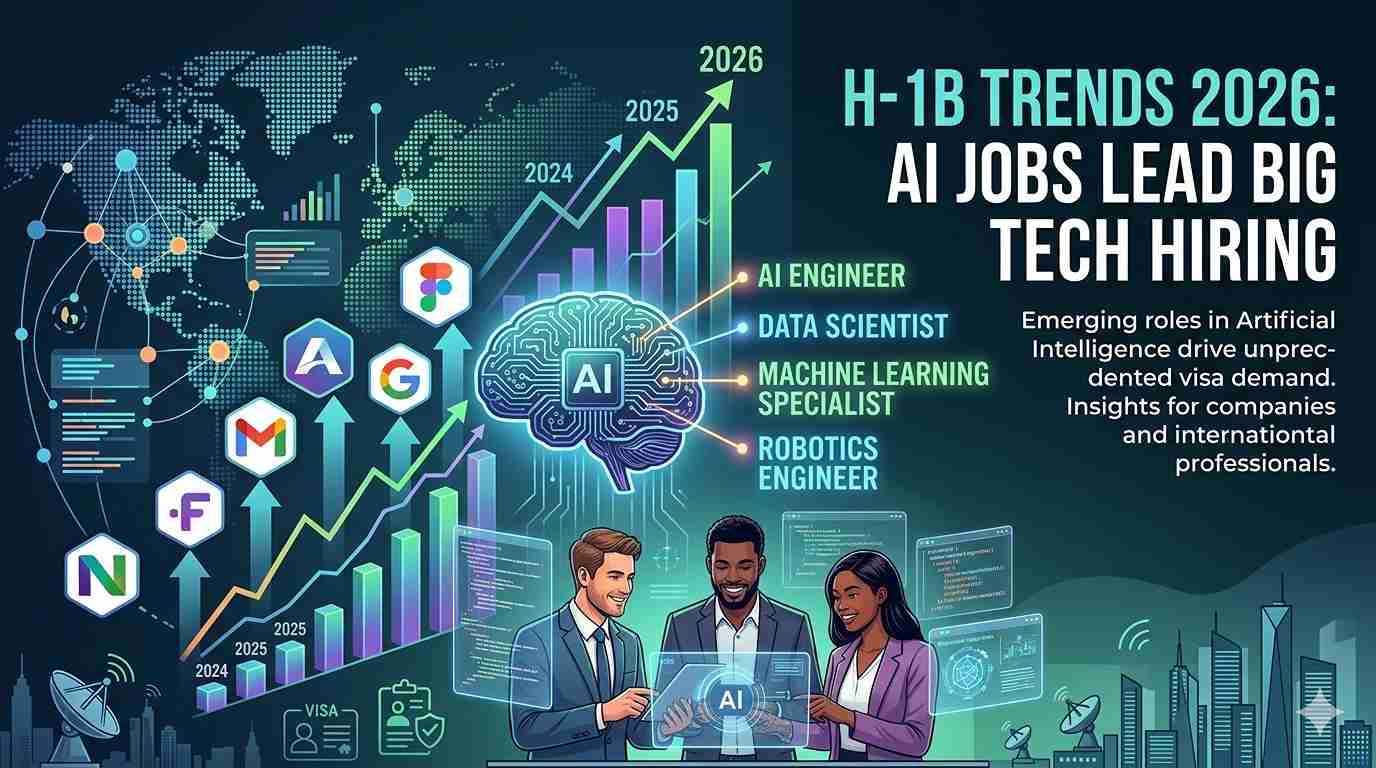
The H-1B visa landscape in 2026 continues to evolve rapidly, with artificial intelligence (AI) emerging as the dominant force behind Big Tech hiring. While overall filings from major companies have declined amid stricter policies and economic adjustments, over 80% of new H-1B labor condition applications at Amazon, Meta, Google, Microsoft, and Apple in FY 2025 were tied to AI-related roles.
For Indian professionals — who historically receive 70-75% of H-1B visas — this shift presents both challenges and significant opportunities. Traditional coding and entry-level IT roles face pressure, but demand for AI, machine learning (ML), data science, and advanced engineering skills remains strong.
Big Tech’s AI-Driven H-1B Push in FY 2025
According to the National Foundation for American Policy (NFAP) analysis of U.S. Department of Labor data:
- Amazon, Meta, Google, Microsoft, and Apple led new H-1B approvals.
- More than 80% of their certified labor condition applications (LCAs) for new employment were for AI-connected occupations, including software developers, data scientists, computer and information research scientists, and ML engineers.
- Software developer roles alone accounted for a large share (e.g., over 60% at Amazon, 58% at Meta, and 71% at Google), many directly supporting AI infrastructure and product development.
This trend reflects Big Tech’s massive AI investments, expected to exceed $1 trillion combined in 2025–2026. Companies are not hiring H-1B talent primarily for cost savings but to fuel innovation in AI alongside U.S. engineers.
NVIDIA also stood out with nearly 1,900 certified H-1B applications focused on software engineering, research scientists, and hardware roles critical to AI chips.
Declining Filings in Early 2026 Amid Policy Changes
Despite the AI focus, H-1B filings dropped in Q1 FY 2026 (October–December 2025):
- Amazon: Down from 4,647 to 3,057 certified applications.
- Meta and Google: Roughly 50% decline.
- Other tech firms like Microsoft, Apple, and IBM also saw reductions.
Factors include ongoing layoffs, higher filing costs, and stricter immigration rules under the Trump administration. A new wage-weighted lottery system (effective for later FY 2027 registrations) now prioritizes higher-wage roles (Level III/IV), giving senior AI/ML engineers a significant edge — with selection odds potentially reaching 88% for top-tier positions.
Indian IT services firms have seen approvals plunge by up to 70%, while product-focused Big Tech continues targeting specialized talent.
Key H-1B Roles in Demand for 2026
Big Tech is prioritizing:
- Machine Learning Engineers
- AI Research Scientists
- Data Scientists & Engineers
- Software Engineers (with AI focus)
- Cloud Architects, MLOps, and infrastructure roles supporting large language models
Higher-paying, senior roles with advanced degrees or proven AI experience now have better chances under the evolving selection process.
Challenges and Opportunities for NRIs and H-1B Aspirants
Challenges:
- Increased competition and lower selection rates for entry-level or routine coding positions.
- Higher visa fees and policy scrutiny.
- Shift away from traditional IT outsourcing toward AI-specialized skills.
Opportunities:
- Strong demand for Indian talent in AI remains, especially for those with real-world experience in building scalable systems.
- Many Big Tech companies are expanding aggressively in India (e.g., Google planning major Bengaluru growth with thousands of AI/ML roles), creating hybrid or return-path options for NRIs.
- Wage-weighted preferences reward experienced professionals commanding competitive U.S. salaries.
Indian engineers continue to excel in these areas, combining strong fundamentals with adaptability.
How NRIs and Indian Tech Professionals Can Strengthen Their H-1B Profile in 2026
- Upskill in AI and Emerging Tech — Master tools like Grok, Claude, and agentic AI platforms. Focus on systems architecture, AI orchestration, MLOps, and multimodal applications rather than pure coding.
- Target Senior or Specialized Roles — Aim for Level III/IV wage positions in AI/ML to improve lottery odds.
- Build a Strong Portfolio — Demonstrate impact with AI projects, open-source contributions, or rapid prototyping using vision-to-code tools.
- Consider India-Based Opportunities — With U.S. Big Tech ramping up hiring in Bengaluru, Hyderabad, and other hubs, many NRIs are exploring return or remote-global roles.
- Explore Alternatives — Look into O-1, EB-1/EB-2 pathways, or intra-company transfers (L-1) for established professionals.
The era of “coding as the primary skill” is shifting toward “AI-augmented building” and high-level problem-solving.
The Road Ahead for Indian Talent
AI ambition, not cheap labor, is driving Big Tech’s H-1B strategy. While the visa path has become more competitive and policy-driven, skilled Indian professionals who adapt quickly to the AI era remain highly valued.
NriGlobe will keep tracking H-1B updates, AI job trends, and strategies for the global Indian community.
What’s your experience? Are you an NRI or H-1B holder navigating the 2026 landscape? How has AI changed your role or job search? Share your thoughts, upskilling tips, or concerns in the comments below.